
SAT policies can change from one testing year to another, and some updates are easy to miss if you’re only focused on studying.
For the 2026–27 testing year, College Board has introduced changes affecting test-center availability, Bluebook, devices, and certain testing accommodations. There are also current rules covering registration, testing devices, score reporting, and test-day conduct.
That doesn’t mean the SAT itself has been completely redesigned.
For most students, the important thing is simply knowing which SAT policy changes apply to you and taking care of them before test day.
What Are the Latest SAT Policy Changes?
The biggest student-facing changes for 2026–27 include:
- A new U.S.-only waitlist when preferred test dates or centers are full
- A resizable embedded calculator in Bluebook
- Improved viewing of reference sheets, charts, graphs, and images
- Windows 11 requirements for Bluebook
- More specific Chromebook requirements
- New requirements for students using certain testing accommodations
College Board says these changes begin with fall 2026 testing. You can review the official College Board 2026–27 testing changes for the full details.
You can also read our College Board Updates guide for broader coverage of recent SAT changes.
Is the SAT Format Changing?
The SAT remains a digital test delivered through Bluebook.
The exam still has two main sections:
- Reading and Writing
- Math
The SAT continues to use a 400–1600 total score scale.
The current policy changes are mainly about the testing experience, technology, access, and administration rather than replacing the SAT with an entirely different test.
If you’re still getting familiar with the digital format, our Digital SAT Updates guide covers the technology changes in more detail.
1. A New SAT Waitlist Is Available in the U.S.
One of the most important changes for U.S. students is the new SAT waitlist.
Beginning with fall 2026 testing, eligible students can join a waitlist when their preferred SAT test date or test center is full.
If a seat becomes available in the selected area, College Board may automatically place the student into the available opening. The current U.S. waitlist fee is $0.
However, joining the waitlist does not guarantee a seat.
This matters if you’re a senior who needs a particular SAT date for college applications.
Don’t assume the waitlist will solve the problem automatically. Check other nearby test centers and available test dates as well.
For more help choosing a location, see our SAT Test Center Information guide.
Is the SAT Waitlist Available Internationally?
No. The new waitlist is currently described by College Board as a U.S.-only option.
International students should check the registration rules that apply to their testing location rather than assuming the same system is available outside the United States.
2. Bluebook’s Embedded Calculator Can Be Resized
College Board has added new functionality to the built-in calculator in Bluebook.
Students can now resize the embedded calculator during the Math section.
It may seem like a small change, but it can be useful when you need the calculator and the question visible at the same time.
The best way to use the update is to practice with the calculator before your actual SAT.
You can still use an approved handheld calculator if that’s your preference and the model meets College Board’s requirements.
3. Reference Sheets and Visual Materials Have Been Improved
Another Bluebook change affects reference sheets and visual information.
College Board says students can view reference sheets in a different layout and use zoom and pan to examine charts, graphs, and images more closely.
This doesn’t change what you need to know for the SAT.
It simply gives you more flexibility when working with information on screen.
For students who have mostly practiced on paper, this is another reason to include digital practice in their preparation.
4. Windows 11 Is Required for Bluebook
One of the most important technical changes affects Windows devices.
For the 2026–27 testing year, Bluebook requires Windows 11.
If you’re planning to use a Windows laptop or tablet, check the operating system before the SAT.
A computer that works perfectly for school assignments may not meet the current testing requirements.
Our SAT Requirements guide can help you review the broader requirements you need to know before test day.
5. Chromebook Rules Are More Specific
Students can use supported school-managed Chromebooks for the SAT, but College Board says verified mode must be enabled.
That can be important because students don’t always have permission to change school-device settings themselves.
If you’re using a school-managed Chromebook, talk with your school’s technology staff before test day.
Also remember that a personal Chromebook isn’t an approved SAT testing device.
Don’t assume that every Chromebook will work simply because it runs ChromeOS.
6. Bluebook Preparation Is Part of SAT Preparation
Students should download Bluebook before test day and make sure it works on their chosen device.
College Board currently says students complete exam setup 1–5 days before the test. The setup downloads the test and generates the admission ticket.
That means your SAT preparation has two parts:
Academic preparation
and
Technology preparation
Our SAT Requirements page is useful for the technical side, while your regular study plan should focus on the actual Math and Reading and Writing skills.
7. College Board May Lend a Testing Device
Students who don’t have an approved testing device may be able to borrow one from College Board in certain circumstances.
College Board says the loaned-device option is based on availability and that students should request the device early.
For the 2026–27 cycle, students requesting a loaned testing device need to register for an SAT test date that is at least 30 days away.
A request doesn’t guarantee that a device will be provided.
If you know you’ll need one, don’t wait until the last few days before your SAT.
8. Accommodation Policies Have Changed for Some Students
Students who use approved testing accommodations should pay special attention to the current rules.
Beginning with fall 2026 testing, College Board says students approved for Text-to-Speech (Embedded) accommodations will generally take SAT Weekend at a test center unless another school-based accommodation has been approved.
Students approved for text-to-speech or screen-reader accommodations also need to bring their own wired, non-Bluetooth headphones.
If you use accommodations, follow the instructions attached to your current approval.
Don’t assume that the equipment or testing arrangement you used for an earlier SAT will automatically be the same.
What Are the Current SAT Testing Rules?
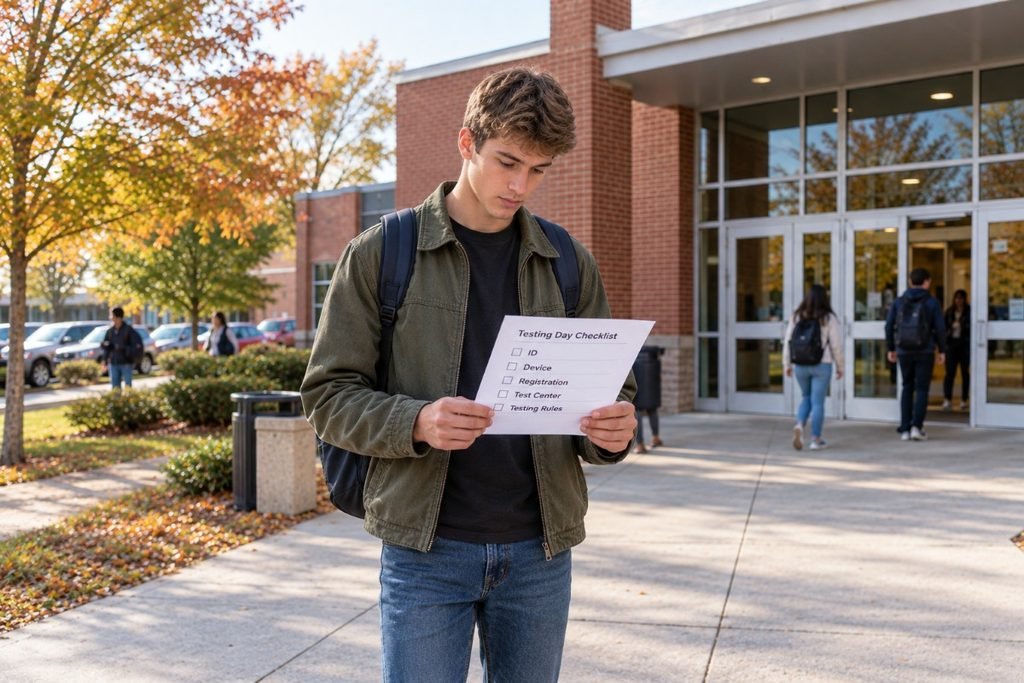
College Board’s SAT Testing Rules were revised on May 19, 2026, and the rules can be updated over time.
They cover areas such as:
- Approved testing devices
- Prohibited devices
- Test security
- Registration
- Testing procedures
- Device use
- Score-related consequences
Students should read the official College Board SAT Testing Rules before the exam, particularly if they have questions about devices or prohibited items.
The rules also make clear that students cannot take the SAT on a mobile phone.
Have SAT Registration Rules Changed?
The basic registration process remains familiar.
You register through your College Board account, select an available test date, and choose a testing location.
However, deadlines and availability still matter.
College Board publishes separate registration and late-registration deadlines for each SAT Weekend date. Registration deadlines expire at 11:59 p.m. ET in the U.S.
For current dates, check College Board’s official SAT Dates and Deadlines.
If you miss the regular deadline, our SAT Late Registration guide explains the available late-registration process.
What Are the Current SAT Fees?
SAT policy changes aren’t limited to technology.
Registration fees and additional charges can also change, so students should check the current fee information before registering.
College Board currently lists the U.S. SAT registration fee at $68 and a $38 late-registration fee for SAT Weekend testing.
Eligible students using an SAT fee waiver can have certain fees waived.
Check the official College Board SAT fee information before completing registration.
Can College Board Change Test-Center Information?
Yes.
Test-center arrangements can change because of operational issues, and students should check their current information close to test day.
This is particularly important if you’re traveling to a school you don’t normally attend.
Keep the latest test-center information available and make sure you know the route before the morning of the exam.
Have SAT ID Policies Changed?
The updated digital-testing rules don’t eliminate the need to follow College Board’s identification requirements.
If your testing situation requires an ID, make sure you have the correct physical identification before the SAT.
A photo stored on your phone should not be treated as a substitute for a required physical document.
Our SAT ID Requirements guide explains the current rules.
Do SAT Policy Changes Affect College Admissions?
Sometimes, indirectly.
The College Board controls the SAT, while individual colleges decide their own admissions and testing policies.
A change to Bluebook doesn’t automatically change whether a college requires the SAT.
Likewise, a new SAT registration rule doesn’t automatically change a college’s application deadline.
If you’re using the SAT as part of your college application strategy, our SAT for College Admissions guide explains how testing fits into the larger process.
You should also check your colleges’ official admissions pages for their current requirements.
What About SAT Score Reporting?
Score-reporting rules are separate from many of the technical changes.
College Board says some colleges allow students to use Score Choice, while some colleges require applicants to submit all SAT scores. Students should check each college’s policy.
The College Board also says it doesn’t release SAT scores to colleges or scholarship programs without the student’s consent.
So before sending scores, make sure you understand the requirements of each institution you’re applying to.
What Has Not Changed?
It’s easy to assume that a long list of SAT updates means everything has changed.
It hasn’t.
Students still need to prepare for:
- Reading and Writing
- Math
- Time management
- Practice questions
- Full-length practice tests
- Mistake review
The SAT still uses the 400–1600 scoring scale.
Your preparation should therefore remain focused on the skills the exam measures.
Technology is part of the experience, but it isn’t the whole test.
What Should Students Do Before the SAT?
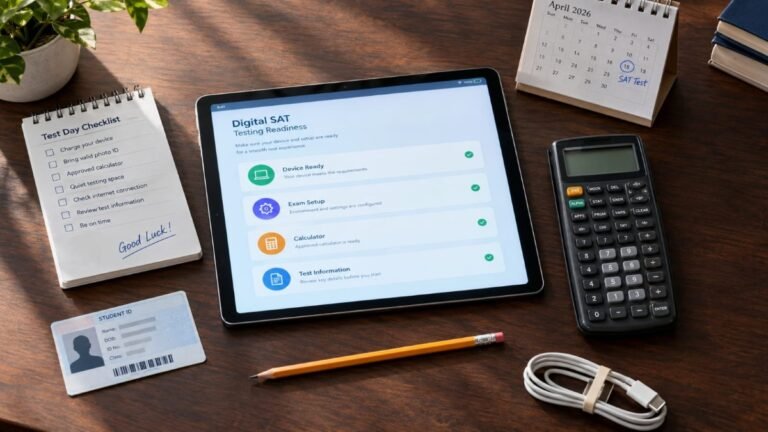
A simple checklist is enough.
Several Weeks Before the Test
Check your device requirements.
Download Bluebook.
Practice digitally.
Confirm your test center.
1–5 Days Before the Test
Complete exam setup.
Get your admission ticket.
Check your device again.
Before Leaving for the Test
Confirm your test-center information.
Bring the required physical ID when applicable.
Make sure your device is charged.
If you use accommodations, bring any required equipment.
You don’t need a complicated system.
You just need to avoid discovering an important requirement after you’ve already arrived at the test center.
Frequently Asked Questions
What are the latest SAT policy changes for 2026–27?
The major student-facing changes include a new U.S.-only waitlist, Bluebook improvements, Windows 11 requirements, more specific Chromebook rules, and changes affecting some testing accommodations.
Is the SAT changing in 2026?
The SAT remains a digital test with Reading and Writing and Math. The main 2026–27 changes concern technology, access, test centers, and accommodations.
What is the new SAT waitlist?
Eligible U.S. students can join a waitlist when their preferred SAT date or test center is full. A seat is not guaranteed.
Is the SAT waitlist available outside the U.S.?
The new waitlist is currently described by College Board as U.S. only.
Is Windows 11 required for the SAT?
Yes. Bluebook requires Windows 11 for the 2026–27 testing year.
Can I use a Chromebook for the SAT?
Supported school-managed Chromebooks can be used when the required verified mode is enabled. Personal Chromebooks aren’t supported.
Can I take the SAT on my phone?
No. A mobile phone isn’t an approved SAT testing device.
Has the Bluebook calculator changed?
Yes. Students can resize the embedded calculator in the Math section.
Do SAT policy changes affect SAT scoring?
No. The SAT remains on the 400–1600 scale.
Does late SAT registration still exist?
Yes. College Board continues to publish late-registration deadlines for SAT Weekend administrations, with an additional fee.
Can I get a testing device from College Board?
Eligible students may be able to borrow a device, subject to College Board’s requirements and availability. Requests need to be made well before test day.
Do SAT policy changes affect college admissions?
Not automatically. Individual colleges establish their own admissions and testing policies.
Final Thoughts
The latest SAT policy changes may look like a lot at first, but most are practical.
For U.S. students, the new waitlist is useful when a preferred test center is full.
For students testing on their own devices, Windows 11 and current Chromebook requirements deserve attention.
Bluebook has also gained useful tools, including a resizable calculator and improved visual viewing.
Students using certain accommodations have additional requirements to review.
You don’t need to memorize every College Board rule.
Know the rules that apply to your situation, prepare your device early, and keep your focus on doing your best on the SAT.


1 Comment
[…] the latest official announcements and changes, check our SAT Policy Changes guide as […]