
If you’ve never registered for the SAT before, the whole process can feel more complicated than it actually is. Between picking a test date, choosing a center, and figuring out whether you qualify for a fee waiver, it’s easy to put it off longer than you should. Here’s the good news: once you sit down and actually do it, registration takes maybe 15 to 20 minutes. The confusion usually comes from not knowing what to expect going in — so that’s what this guide is for.How to Sign Up for the SAT in 2026
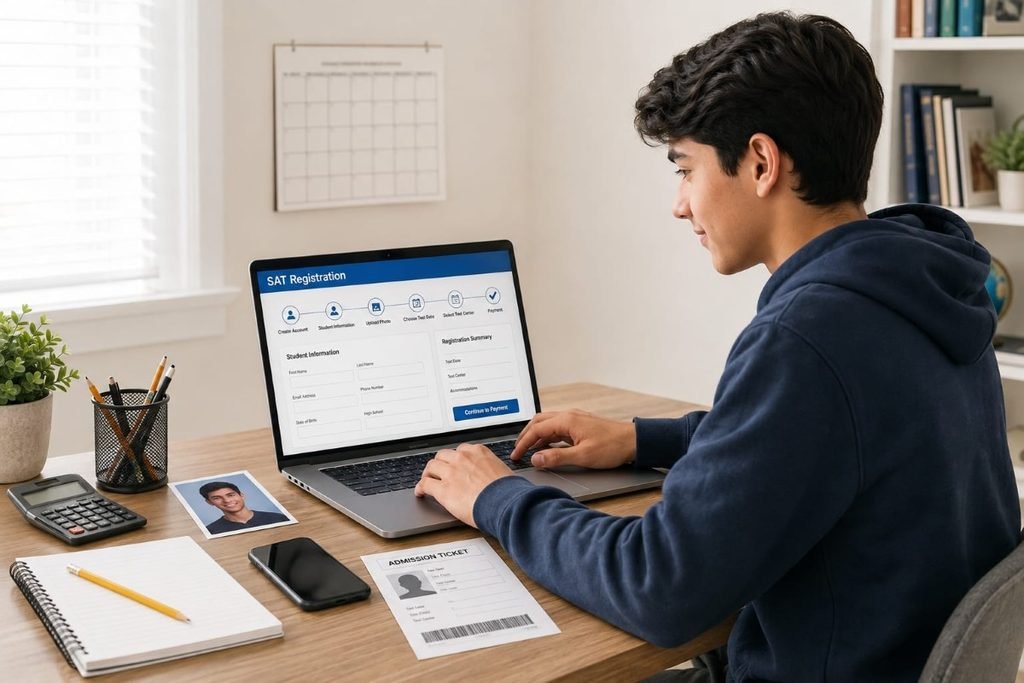
We’ll walk through the SAT registration for 2026 process from start to finish, including current test dates, what it actually costs, who qualifies for a waiver, and the small mistakes that trip up a surprising number of students every year.
Does the SAT Still Matter?
This question comes up a lot now that so many colleges have gone test-optional, and it’s fair. But “test-optional” doesn’t mean “test-irrelevant.” A solid SAT score can still strengthen an application, and it’s often the difference-maker for merit scholarships that have nothing to do with need-based aid — plenty of schools use SAT scores specifically to decide who gets automatic scholarship money, regardless of whether they require the test for admission at all. A handful of states also use SAT scores for graduation requirements or course placement, so depending on where you live, it might not even be optional in the way you think.
There’s also the practical side: even at test-optional schools, submitting a strong score can only help you, and for students applying to more competitive programs — engineering, business, honors colleges — a good score still carries real weight in how your application gets read.How to Sign Up for the SAT in 2026
One thing worth knowing before you register: the SAT has been fully digital since 2024. It runs through College Board’s Bluebook app, the format is adaptive (meaning the difficulty shifts based on how you’re doing), and you get a calculator built into the entire math section now — no more switching between calculator and no-calculator portions. If the last thing you heard about the SAT involved a fat paper booklet and a No. 2 pencil, a lot has changed.
Where You Actually Register
Everything happens on College Board’s official site — satsuite.collegeboard.org to start, or mysat.collegeboard.org if you’re using your College Board login to sign back in. That’s it. That’s the only legitimate place to register.
I mention this because there are third-party sites out there that offer to “help” you register for a fee. You don’t need them. Registration is something you can do yourself in one sitting, and no one — not a parent, not a counselor, not a tutor — can do it for you anyway. Everyone has to create their own individual account.
The Registration Process, Step by Step
Here’s roughly what it looks like once you sit down to do it:
You’ll start by creating a College Board account, and it’s worth using an email you actually check — your admission ticket, score notifications, and any updates all come through there. From there, you fill out your student profile: full legal name exactly as it appears on your photo ID (this trips people up more than you’d think), date of birth, address, and school info like your grade and expected graduation year.
Next comes the photo. College Board wants a clear, recent headshot — no sunglasses, no hats, no filters, nobody else in frame. This becomes part of your admission ticket, so don’t rush through it or upload something from three years ago.
Then you pick your test date and test center. The SAT runs about seven times a year, and fall dates especially fill up fast because that’s when juniors and seniors are racing against college application deadlines. Search by ZIP code, pick a center with open seats, and know that registering earlier generally means better options — both in terms of date and location.
Once you’ve paid the fee (card or an approved waiver code), you’re not quite done. Because the test is digital now, you also need to download Bluebook and complete exam setup on your device — College Board recommends doing this one to five days before your test date, not the night before. Your admission ticket becomes available after that setup is finished.
2026 Test Dates
The SAT is given on Saturdays throughout the year, with limited Sunday options for students who can’t test on Saturdays for religious reasons. For 2026, there are administrations spread from spring through the fall, with the September-through-December window being the busiest stretch since that’s peak season for college-bound juniors and seniors.
Registration windows open roughly three to four months ahead of each test date — so if you’re eyeing an October test, expect registration to open around July. Dates shift slightly year to year, so treat anything here as a starting point and confirm the exact schedule on College Board’s official “Dates and Deadlines” page before committing to anything.
Regular Registration vs. Late Registration
There are really two windows here, and knowing the difference can save you money.
Regular registration closes about three to four weeks before test day, and that’s when you pay the standard fee. After that, there’s a late registration window that stays open until roughly 10 days before the test — but you’ll pay extra for the privilege. Miss that too, and you’re generally out of luck for that date, though some students manage to grab a spot through a test center waitlist if seats open up.
Bottom line: register as soon as you’ve picked a date. There’s no upside to waiting.
What It Costs
Here’s the fee breakdown for U.S. students in 2026:
| Fee Type | Approximate Cost |
|---|---|
| Standard registration (U.S. test centers) | $68 |
| International testing fee | +$43 (about $111 total) |
| Late registration | +$38 |
| Test center change | +$34 |
| Cancellation | $34-44 |
| Extra score reports beyond the free four | $14-15 each |
That $68 base fee is flat across every state — doesn’t matter if you’re testing in California or Vermont. And keep in mind College Board adjusts these numbers from time to time, so treat the figures above as a solid estimate, not gospel. Always check the actual number at checkout.
What does that base fee actually get you? One full test, access to Bluebook, an online score report a few weeks later, and four free score reports to colleges of your choosing — but only if you pick those colleges within nine days of testing. Miss that window and you’re paying per report afterward.
If Money Is Tight
College Board offers fee waivers for students who qualify based on financial need, and they’re genuinely worth checking into if cost is even a small concern. A waiver typically covers two SAT registrations (so you can retake it once for free), unlimited score reports, and it waives the late fee and test-center-change fee too. Some students also get college application fee waivers bundled in.
Your school counselor can walk you through eligibility, or you can check during registration itself. Common qualifiers include things like enrollment in the National School Lunch Program, family income under federal thresholds, or circumstances like being in foster care.
Test Day: What to Actually Bring
Since everything runs through Bluebook now, the packing list looks a little different than it used to.
You’ll need a charged device with Bluebook installed and exam setup already completed — not something you’re scrambling to figure out in the parking lot. Bring your admission ticket (printed if you can), a real physical photo ID (a photo of your ID on your phone doesn’t count), something to write with for scratch work, and your College Board login info in case you need it. If you’d rather use your own calculator instead of the built-in one, that’s fine too, as long as it’s an approved model.
A portable charger isn’t a bad idea either — three hours is a long time to ask a device to hold a charge, especially if it’s not brand new. Bring a snack for your break too.
One thing to be careful about: phones, smartwatches, anything that can communicate or record has to be off and put away. Not silenced — off. Getting caught with a device that’s still on, even by accident, can get you dismissed from testing. It sounds harsh, but College Board doesn’t make exceptions here, and every year a handful of students learn that the hard way over something as small as a phone buzzing in a backpack pocket. Not worth the risk.
Accommodations
If you have a documented disability, College Board’s Services for Students with Disabilities office handles accommodation requests — things like extended time, extra breaks, or text-to-speech built into Bluebook. If you’re approved for text-to-speech, note that you’ll need your own wired headphones; Bluetooth isn’t allowed in the testing room.
This isn’t a last-minute process. If you’ve never requested accommodations before, start several months ahead of your intended test date, since documentation review takes time.
Mistakes Worth Avoiding
A few things come up again and again with students who’ve had a rough registration experience:
Waiting too long is the big one — it limits your test center options and eventually costs you a late fee for no good reason. Uploading a photo that doesn’t meet the guidelines can hold up your account approval. Registering under a name that doesn’t exactly match your ID causes headaches at check-in. Skipping Bluebook setup until test morning is a genuinely bad idea and can keep you from testing altogether. And forgetting to pick your free score recipients within that nine-day window means paying for reports you could’ve gotten free.
How Many Times Should You Actually Take It?
There’s no official limit on retakes, but most students land somewhere around two to three attempts before hitting their target score. Since College Board often allows superscoring — combining your best section scores across different test dates — it’s usually smarter to space attempts out with real prep in between rather than testing back-to-back without changing anything. A full-length SAT practice test beforehand can give you a realistic read on whether you’re actually ready for another attempt or need more time. And remember, every retake adds to your total cost, so testing with a plan beats testing on repeat.
Quick Answers
Can I take it for free? Yes, if you qualify for a fee waiver based on financial need.
Does someone else have to register for me? No — and actually, they can’t. Every student registers under their own account.
Is it really all digital now? Yes, fully, since 2024, through Bluebook.
What if I miss both deadlines? You’ll likely have to wait for the next test date, unless a waitlist spot opens up — no guarantees there.
Can I switch my center or date later? You can, but expect an added fee, and it has to happen before the relevant deadline.
When do scores actually show up? Usually two to four weeks out. For dates tied to your specific test, the 2026 SAT score release schedule breaks it down by administration.
How early should Bluebook setup happen? One to five days before test day — don’t leave it for the morning of.
The One Thing to Remember
If there’s a single takeaway here, it’s this: the late fee is the easiest cost to avoid, and yet plenty of students end up paying it anyway simply because they put registration off. Set a reminder a week before the regular deadline hits. It costs you nothing, and it means you get first pick of test centers, more breathing room to get Bluebook set up properly, and one less thing hanging over you as application deadlines start closing in.
This guide reflects publicly available information as of 2026. Fees, dates, and policies belong to College Board and can change without notice — double-check anything time-sensitive on their official site before you register.



2 Comments
[…] If you want a more detailed walkthrough of the next step, see our guide on how to sign up for the SAT in 2026. […]
[…] you’re registering for the SAT, you can learn more about the process in our How to Sign Up for the SAT […]